Note
Watching brief vs desk-based assessment: what's the difference?
If you've ever had a planning condition land on your desk worded something like "a programme of archaeological work to be agreed with the local planning authority," you already know the problem. That single phrase could mean a desk-based assessment, a watching brief, evaluation trenching, or all three in sequence. Knowing which one you're actually being asked for, and when, saves weeks of back-and-forth with the curator.
What a desk-based assessment does
A desk-based assessment (DBA) happens before anyone picks up a mattock. It's a paper and archive exercise: HER data, historic mapping, LiDAR where you can get it, geology, previous grey literature for the area. The output is a statement of archaeological potential, usually banded (low, moderate, high) by period and by part of the site, plus a recommendation for what should happen next if the development goes ahead. No ground is broken. Nothing gets disturbed. It's the document that tells the planning authority, and your client, whether there's enough risk here to justify further work at all.
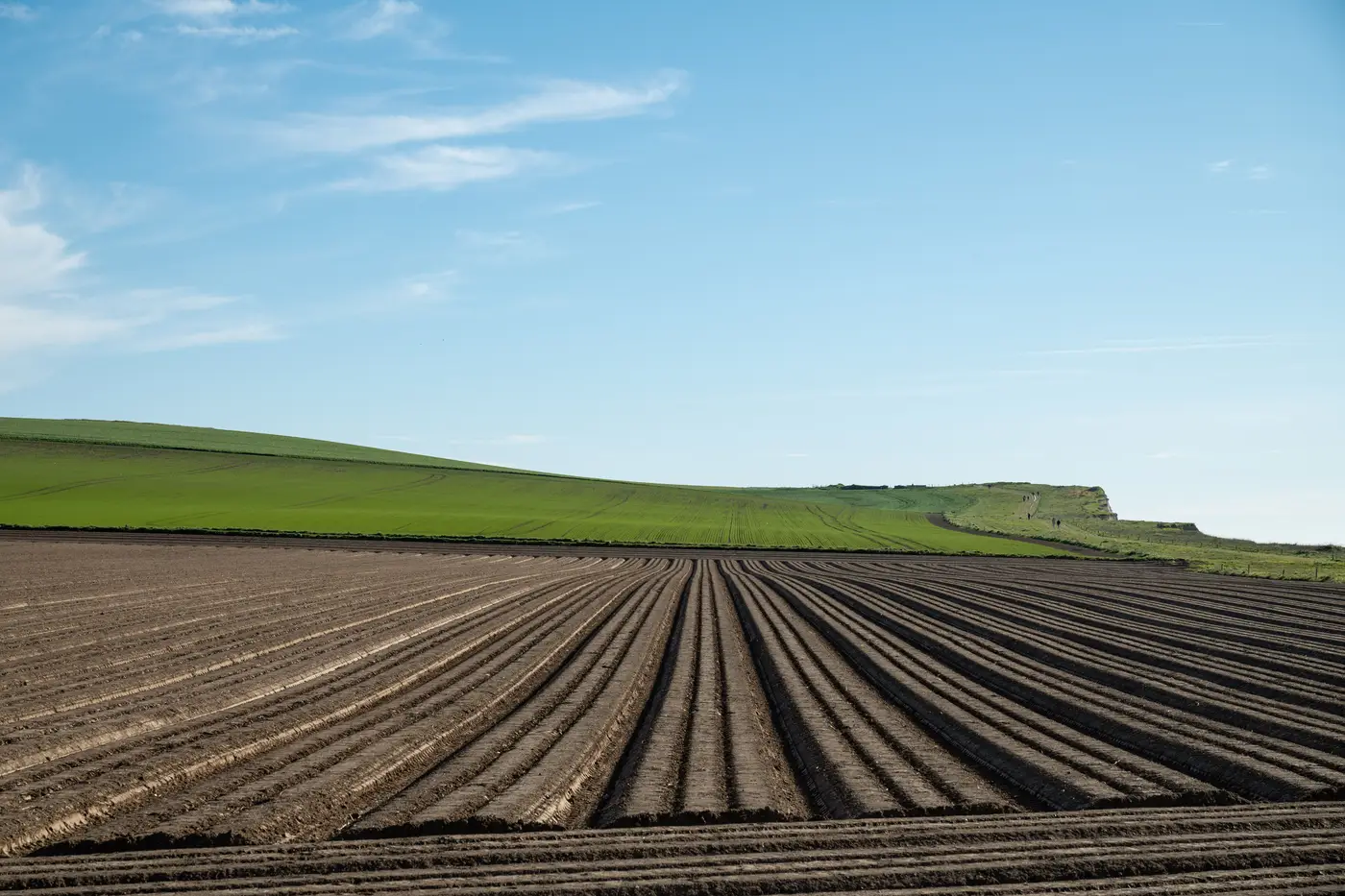
Done properly, a DBA also does the job of narrowing where that further work should focus. If the mapping and cropmark record flag a probable enclosure in the northwest corner of the site and nothing in the rest of the field, that's useful. It means the mitigation strategy a desk-based assessment recommends can be targeted rather than a blanket condition over the whole red line. This is one of the places where a fresh look at the ground pays for itself: a current cropmark layer over your draw area often turns up features the HER never recorded, because nobody's flown that field in a dry enough year since the 1970s survey.
What a watching brief actually is
A watching brief is a different animal entirely, and it happens at the other end of the process. The archaeological watching brief definition, in plain terms, is a condition of planning consent requiring a qualified archaeologist to be present during groundworks, specifically so that if anything turns up, it gets recorded before the machine moves on to the next run. It's monitoring, not investigation. You're standing next to the contractor's excavator watching the spoil as cable trenches, foundation strips or service runs go in, ready to stop work and record if a feature or a find appears.
Watching briefs get imposed when the curator judges the archaeological risk as present but low or uncertain enough that full-scale evaluation isn't justified. Maybe the DBA came back moderate rather than high. Maybe the development footprint is mostly reduced depth (landscaping, resurfacing) where truncation is unlikely to hit anything significant. Either way, a watching brief is a safety net attached to the groundworks themselves, not a standalone phase of fieldwork you schedule in advance like a DBA or an evaluation.
Why the two get mixed up
The confusion usually comes from the fact that both are conditions attached to the same consent, often worded in similarly vague planning-speak, and both can show up on the same project. A single scheme might carry a condition requiring a DBA pre-determination, and a second, separate condition requiring a watching brief during construction once consent is granted. They run in sequence, and each one answers a different question. The DBA asks "is there anything here worth worrying about, and where." The watching brief asks "did we miss it, and are we catching it as the ground gets opened."
Where this goes wrong in practice is when a DBA under-calls the risk, the curator accepts a watching brief as sufficient mitigation, and the watching brief archaeologist ends up standing in a trench watching significant archaeology come up that nobody budgeted time or money to deal with properly. That's a programme failure rooted at the desk stage, even though it only becomes visible once the excavator is already moving. It's also exactly the scenario a better cropmark picture at the DBA stage is meant to head off: features that would have pushed the recommendation from watching brief to evaluation, caught before the contractor has plant booked.
If your draw area has gone unflown since the last aerial survey, it might be worth checking what the ground's been trying to tell you.